BOTS & Artificial Intelligence for Business
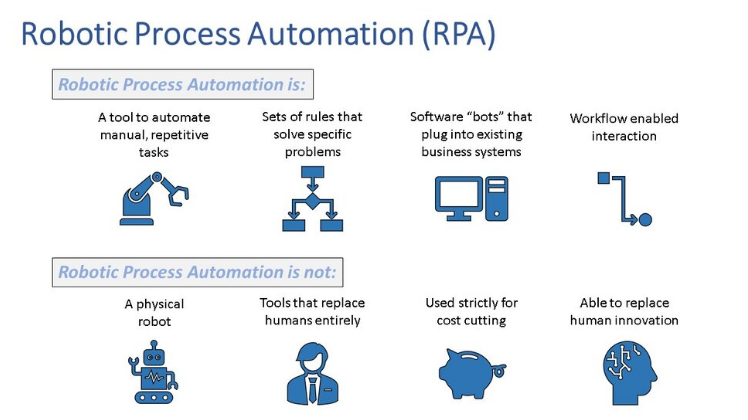
Robotic Process Automation are used in business to automate the manual repetitive tasks by creating a business workflow using AI tools. These Bot’s can be run at anytime to perform a specific action on the application.
RPA software robots can be programmed to mimic the actions of a human user, such as logging into applications, entering data, and performing calculations. The software can be trained to perform tasks across multiple applications and systems, making it a powerful tool for automating business processes.
RPA can be scaled up or down depending on the needs of the organization, allowing it to handle fluctuating workloads without the need for additional human resources. It can perform tasks with a high degree of accuracy, reducing the potential for errors that can lead to costly mistakes. RPA can help organizations ensure compliance with regulations and standards. It can free up employees to focus on higher-value tasks.
For example, If organisations deal with orders transactions which needs to be updated manually in different time throughout the day, a BOT can do this job without any manual intervention. This Automated BOT will save time for the Business users to focus on other critical tasks.
Another BOT example with financial transactions: If the system records needs to reconcile frequently using the inputs from two or more systems , a BOT can be used to automate the process so that it can be run every day for the business.
Powerful AI tools are available in the market to automate the business process to improve the efficiency of the team performance.
Our offerings

Consulting Service
We offer consulting services and work with clients to develop an RPA strategy that aligns with their business objectives, identifies potential processes for automation, and defines a roadmap for implementation.

Implementation Services
We provide end-to-end implementation of RPA solutions, including process design, bot development, testing, and deployment. Our RPA implementation services can help organizations design, build, and deploy RPA solutions, ensuring that they are configured correctly and integrated with existing systems. The success of our service depends on the value we deliver to our clients. We ensure that our solutions are effective, efficient, and easy to maintain, and that they deliver a measurable return on investment.

Maintenance and support services
Our RPA maintenance and support services can help organizations ensure that their RPA solutions continue to operate effectively, providing ongoing support and troubleshooting as needed. Our team of experts is dedicated to ensuring that client’s RPA solutions are always up-to-date, optimized, and delivering value to your business. We work with clients to develop a maintenance schedule that minimizes downtime and disruption to your business. We provide rapid troubleshooting and issue resolution services to ensure that any problems with your RPA solutions are addressed promptly and effectively. Our team works with clients to optimize the performance of client’s RPA solutions, ensuring that they continue to deliver maximum value to your business. We also provide real-time monitoring of client’s RPA processes and generate regular reports on their performance. This information helps clients to make data-driven decisions to further optimize their RPA solutions.
Training and Education Services
Our RPA training and education services help organizations to train their employees on how to use RPA solutions effectively, enabling them to take full advantage of the technology. Our programs are tailored to your business needs and are delivered by our experienced trainers.
Managed Services
RPA managed services can help organizations to outsource the management of their RPA solutions to a third-party provider, ensuring that they are maintained and optimized for optimal performance. Our team manages Client’s RPA solutions from end to end, ensuring that they are running smoothly and efficiently. We take care of everything from configuration and testing to monitoring and maintenance. We monitor client’s RPA processes in real-time and optimize their performance to ensure that they are delivering maximum value to your business. We provide regular upgrades and maintenance to ensure that client’s RPA solutions are always up-to-date and running smoothly.
Integration Services
We offer RPA integration services which help organizations to integrate their RPA solutions with other systems and applications, enabling them to achieve greater automation and efficiency across their business processes.
Business Usecase
1. Invoice Processing:
RPA can significantly improve the invoice processing process by automating repetitive tasks, reducing errors, and improving processing times.
RPA can extract data from invoices using optical character recognition (OCR) technology. The software can read and extract information from different types of invoices, including paper and electronic invoices. Once the data is extracted, RPA can automatically validate the information against predefined rules to ensure that it is accurate and complete. RPA can compare the invoice data against the corresponding purchase order to ensure that the invoice is legitimate and matches the agreed-upon terms. This can reduce errors and minimize the need for manual intervention.
RPA can route invoices to the appropriate stakeholders for review and approval. The software can automatically escalate invoices that require additional approvals, ensuring that the approval process is streamlined and efficient. Once the invoice has been approved, RPA can initiate the payment process. The software can generate payment requests, update payment information, and send notifications to stakeholders, all without human intervention.
2. Supply Chain Management :
RPA can play a significant role in automating and optimizing supply chain management processes
Inventory Management: RPA can help automate the inventory management process, from monitoring inventory levels to ordering and receiving products. The software can track inventory levels in real-time and automatically reorder products when levels fall below a certain threshold. This can help businesses avoid stockouts, reduce excess inventory, and optimize supply chain operations.
Order Processing: RPA can automate the order processing process, from order entry to order fulfilment. The software can automatically generate purchase orders, update order status, and send notifications to stakeholders. This can reduce manual data entry errors, improve order accuracy, and streamline the order fulfilment process.
Logistics Tracking: RPA can automate the logistics tracking process, from tracking shipments to updating delivery status. The software can track shipments in real-time, provide status updates to stakeholders, and automatically reroute shipments in case of delays or other issues. This can improve visibility into supply chain operations and enhance customer satisfaction.
Vendor Management: RPA can automate the vendor management process, from onboarding to contract management. The software can manage vendor data, track vendor performance, and automatically generate contract renewals. This can reduce administrative overhead, improve vendor relationships, and help businesses identify cost-saving opportunities
Procurement: RPA can automate the procurement process, from identifying potential suppliers to issuing purchase orders. The software can analyze supplier data, track prices and discounts, and generate purchase orders. This can improve procurement efficiency, reduce costs, and enhance supplier relationships.
3. Sales and Marketing:
Lead Generation: RPA can automate the lead generation process, from identifying potential leads to collecting contact information. The software can analyse customer data, search for prospects, and collect and validate contact information. This can help businesses identify new leads more efficiently and accurately.
Sales Order Processing: RPA can automate the sales order processing process, from order entry to order fulfillment. The software can automatically generate sales orders, update order status, and send notifications to stakeholders. This can reduce manual data entry errors, improve order accuracy, and streamline the order fulfilment process.
Customer Data Management: RPA can automate the customer data management process, from collecting and organizing customer data to updating customer records. The software can analyse customer data, validate and clean data, and update customer records. This can help businesses maintain accurate customer records and improve customer engagement.
Email Marketing: RPA can automate email marketing tasks, such as creating and sending emails, managing email lists, and tracking email metrics. The software can generate email templates, manage email lists, and track email metrics. This can help businesses improve their email marketing campaigns and increase customer engagement.
4. HR Processes:
RPA can be used to automate HR processes, such as employee onboarding, time and attendance tracking, and performance evaluations. This can reduce administrative tasks and free up time for HR staff to focus on more strategic activities..
Recruitment: RPA can automate the recruitment process, from identifying potential candidates to scheduling interviews. The software can analyse resumes, search for candidates, and schedule interviews with candidates. This can help businesses identify and recruit new talent more efficiently and accurately.
Employee Onboarding: RPA can automate the employee onboarding process, from collecting and organizing new hire information to updating employee records. The software can collect and validate new hire data, update HR systems, and assign tasks to relevant stakeholders. This can help businesses streamline the onboarding process and reduce administrative overhead.
Payroll Processing: RPA can automate the payroll processing process, from collecting and verifying employee data to generating paychecks. The software can collect and validate employee data, calculate taxes and deductions, and generate paychecks. This can help businesses reduce errors and processing times associated with manual payroll processing.
Benefits Administration: RPA can automate benefits administration tasks, such as enrolling employees in benefits programs and updating benefit plans. The software can collect and validate employee data, update HR systems, and enrol employees in benefits programs. This can help businesses improve benefits administration efficiency and accuracy.
Employee Records Management: RPA can automate employee records management tasks, such as updating employee records and responding to employee inquiries. The software can update employee records, retrieve employee data, and respond to employee inquiries. This can help businesses maintain accurate employee records and reduce administrative overhead.
5. Financial Services:
RPA can be used to automate financial services processes, such as loan processing, account reconciliation, and fraud detection. This can improve accuracy, reduce processing times, and improve customer satisfaction.
Account Opening and Maintenance: RPA can automate the account opening and maintenance process, from collecting customer data to updating account information. The software can collect and validate customer data, update account information, and notify relevant stakeholders. This can help banks and financial institutions reduce processing times and improve customer satisfaction.
Loan Processing: RPA can automate the loan processing process, from collecting and validating loan applications to disbursing funds. The software can collect and validate loan data, calculate loan eligibility, and disburse funds. This can help banks and financial institutions improve loan processing efficiency and reduce errors.
Fraud Detection and Prevention: RPA can automate fraud detection and prevention tasks, such as monitoring transactions and analyzing customer data. The software can monitor transactions in real-time, flag suspicious activity, and notify relevant stakeholders. This can help banks and financial institutions detect and prevent fraud more effectively.
Regulatory Compliance: RPA can help banks and financial institutions ensure compliance with regulatory requirements by automating compliance tasks. The software can monitor and analyse regulatory changes, update policies and procedures, and generate compliance reports. This can help banks and financial institutions reduce compliance risks and avoid regulatory penalties.
Financial Reporting: RPA can automate financial reporting tasks, such as generating financial statements and analyzing financial data. The software can generate financial statements, analyse financial data, and notify relevant stakeholders. This can help banks and financial institutions improve financial reporting accuracy and reduce processing times.
Why to choose us ?
- Our team has extensive experience in business process automation, and we have successfully implemented RPA solutions for clients across different industries.
- We understand that every business has unique needs, and we provide tailored solutions that are designed to meet client’s specific business requirements, ensuring that RPA solutions are always aligned with your business objectives.
- Our RPA Services are cost-effective and we focus on delivering measurable ROI to our clients by identifying the right processes for automation and optimizing them for maximum efficiency.
- We take a proactive approach to RPA Support, anticipating issues before they arise, and ensuring that RPA solutions are always optimized and delivering value to client’s business to meet their evolving needs
Contact Us ?
Ready to take your business to the next level with RPA?
Contact us to learn more about our RPA services and how we can help automate your processes , improve your bottom line and how our RPA solutions are seamlessly integrated into your existing technology infrastructure, delivering maximum value to your business.